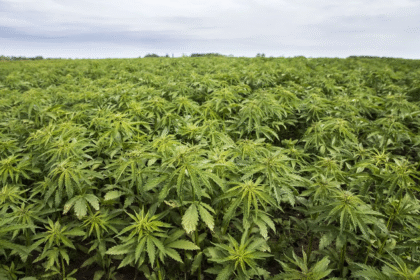
At the recent Green Party conference, newly elected leader Zack Polanski publicly called for the full legalisation of all drugs, including heroin and crack cocaine, arguing that the “war on drugs has absolutely failed.” He framed the shift as treating drug use through a public health lens instead of criminal justice, saying drug markets cost taxpayers, empower gangs, and produce unnecessary harms.
Polanski’s proposal is bold, far beyond many drug reform proposals which tend to focus on cannabis or decriminalising small amounts. It demands a serious reckoning: can full legalisation be done responsibly? What does the evidence from other contexts suggest?
What the Proposal Means — and What It Doesn’t
First, it’s useful to clarify what “legalise all drugs” might entail in practice (rather than as slogan). In rigorous policy design, that would typically mean:
- The removal of criminal penalties for possession and use (for personal amounts).
- A regulated framework for production, distribution, sale, and quality control (at least for those drugs deemed permissible).
- Safeguards around age limits, labeling, potency limits, permitted sale channels, and oversight agencies.
- A strong emphasis on treatment, harm reduction, prevention, and monitoring to accompany any legalisation.
Crucially, legalisation does not mean no regulation. The devil lies in the regulatory detail: how to balance freedom of access, public health, safety, and social costs.
Polanski argues that continuing prohibition maintains black markets, powers criminal gangs, and leaves users vulnerable to adulterated substances, and that taxpayers currently bear the costs in policing, courts, prisons, and health harms. In some respects, his claim aligns with many critiques of prohibition, though the scale of the shift he proposes is rare in mainstream political discourse.
What the Evidence Says: Supporting Positives of Legalisation & Decriminalisation
1. Harm reduction, safer supply, and fewer overdoses
One of the strongest rationales for legalisation is that regulated supply can reduce the dangers associated with black market drugs: unknown potency, adulterants, spiking, and unpredictable mixtures.
- In Portugal (which decriminalised possession across all drugs, though not entirely legalised supply), overdose deaths, HIV transmission, and other harms have declined in absolute and relative terms over time. While correlation is not direct causation, the shift to a public health framework appears to have contributed.
- In some U.S. states, policy bundles (legal or medical cannabis, naloxone availability, and access to medication-assisted treatment) have been associated with reductions in overdose deaths, though these are incremental changes, not sweeping full legalisation.
- A review of decriminalisation and legal regulation literature finds that many of the feared “mass usage booms” have not materialised; in many contexts, usage rates remained stable after reforms.
- In Canada, researchers monitoring post-legalisation outcomes of cannabis have documented both increases in use (particularly reported use) and some increases in emergency department visits, but also positive elements: regulated product quality, tax revenue that can be reinvested in health, displacement of illicit markets.
Thus, while legalisation doesn’t eliminate risk, it can shift risk from drug supply (contamination, uncertain potency) to more manageable forms, if regulation works well.
2. Cost savings and reallocation of criminal justice resources
Prohibition imposes heavy burdens on policing, courts, prisons, and enforcement. Legalisation or decriminalisation can allow resources to be shifted toward prevention, health, addiction services, and serious criminal activity.
- Some modeling studies show that the savings in criminal justice costs can be substantial, especially in heavily policed areas.
- If part of tax revenue from legal markets is directed to health, education, rehab, and social support, the net social return can be positive.
- By reducing the number of arrests, convictions, and incarceration of nonviolent users, legalisation can also reduce broader social harms (loss of employment, stigma, broken families, overrepresentation of marginalized groups in the criminal system).
3. Reduced black market power and related violence
Illegal markets thrive because users must turn to unofficial, unregulated sources. Legal alternatives can undercut those markets.
- Uruguay’s cannabis legalization model intended to undercut illicit supply by giving legal options (though the black market has persisted).
- In regulated markets, consumers have a safer, more transparent choice, reducing dependence on dangerous intermediaries.
- Reducing the profitability of illegal trafficking reduces crime associated with enforcement, turf wars, corrupt intermediaries, and violence in the supply chain.
4. Social and health benefits: stigma reduction, better treatment uptake, honest education
When drug users are not criminalised, they may find it easier to come forward for help, access treatment, or engage with harm reduction services.
- Stigma is a barrier in public health. If drug addiction is reframed as a medical issue, more people might seek help.
- Legal regulation allows for open, realistic education about risks, safer practices, and open research.
- Decriminalisation (and regulated legal frameworks) can help reintegrate people who use drugs rather than pushing them to the margins.
5. Substitution effects and reduction of more harmful drug use
One of the intriguing patterns in some studies is that legal access to less harmful substances can reduce demand for more harmful ones.
- In the U.S., some analyses suggest that states with medical cannabis laws saw reduced opioid prescription rates and reduced opioid overdose mortality (though causality is contested).
- The logic is that if people can use a less harmful alternative under regulation, they may avoid more dangerous options.
What to Watch Out For: Risks, Challenges, and Policy Design
Polanski’s proposal is radical, and for good reason: implementing full legalisation is rife with complexity and potential unintended consequences. Some challenges include:
- Regulation design: It must be robust, setting age limits, potency caps, labeling, vendor licensing, quality control, advertising limits. Without care, regulations may be weak, enabling overuse or harmful marketing.
- Monitoring and dynamic adjustment: Policies must be treated as experiments, with monitoring, data collection, and the ability to adjust in response to harms (e.g. spikes in hospitalizations, accidents, impaired driving).
- Treatment and harm reduction capacity: Legalisation must be paired with funding for treatment, harm reduction (e.g. supervised consumption, needle exchange), mental health support. Otherwise, people with problematic use may slip through the cracks.
- Balancing access and control: If legal access is too restrictive, black markets will persist. If too lax, excessive consumption or public nuisance may occur.
- Social equity and transitional justice: Many people currently have criminal records for drug offences. Legalisation without addressing those past harms would perpetuate injustice. Any policy should consider expungement, reintegration, or amnesty for prior minor offences.
- Public perception, political pushback, and social norms: Even if evidence supports reforms, many people worry about signals sent by legalisation, or increased normalization of drug use. Policy must address public concerns in a transparent way.
- Cross-border and international constraints: Countries are bound by international treaties (e.g. UN drug conventions). Reformers must navigate or renegotiate treaties, trade, cross-border traffic issues.
How the New Green Leader’s Proposal Could Be a Catalyst — or a Caution
Polanski’s call is provocative, but that can be strategic. It forces public debate, challenges taboos, and may shift Overton windows (what is politically thinkable). In his speech, he explicitly framed the issue as one of public health and justice rather than morality or prohibition.
If such proposals gain traction, they could push mainstream parties to consider more moderate reforms (partial decriminalisation, regulated cannabis, pilot safe supply schemes). Already in UK politics, there is increasing discussion of drug law reform, although no major party has embraced full legalisation of all drugs as a policy.
However, the scale of Polanski’s proposal means that for it to be credible, the Greens would need to present detailed policy frameworks, evidence from comparable jurisdictions, and a phased implementation plan with safeguards. Otherwise critics will emphasize worst case scenarios or cherry pick negative examples from weakly regulated markets elsewhere.
Conclusion: A Bold Step, Backed by Growing Evidence (If Done Right)
Zack Polanski’s announcement has jolted the discourse. Legalising all drugs is rarely seriously proposed by major parties, but he is making precisely that move. While many details remain unspecified, the evidence from decriminalisation, partial legalisation, and regulatory experiments suggests that a well designed shift could bring significant benefits: reduced harm, cost savings, better public health, and weakening of illegal markets.
But it is not a risk free path. The success of any such reform depends heavily on regulatory design, continuous monitoring, strong health and social support systems, and a willingness to adjust as data emerges. If the Greens (or any party) want this to be more than a rallying cry, they will need to translate bold visions into rigorous, evidence-based policy frameworks with real safeguards.