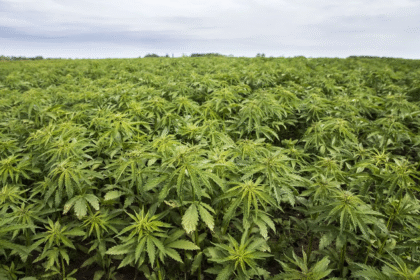
After what many in the hemp sector call a “five-year struggle,” Europe’s hemp industry appears to be emerging from regulatory limbo into clearer legal and commercial recognition. A recent report at Business of Cannabis documents how years of advocacy, market building, and policy negotiation have paved the way for hemp (especially low THC hemp flower) to be treated more like an agricultural commodity rather than a suspect crop.
This moment is more than symbolic. As lawmakers and regulators awaken to hemp’s non-narcotic nature, its environmental promise, and its economic opportunity, there’s a real chance for transformative reform. In the UK, Ireland, and across Europe, removing outdated barriers could unleash farmers, innovators, and health market entrants.
Hemp with <0.3% THC: Non-narcotic, non-addictive, low risk
One of the foundational claims of hemp advocates is that hemp flower with THC well below 0.3% is essentially non-narcotic, non-addictive, and carries minimal risk of dependency or abuse, characteristics long documented in cannabis research.
- The European Commission’s agricultural policy frames hemp as cannabis sativa cultivated for industrial uses, with very low THC so that it is “not used to produce narcotic drugs.”
- A comprehensive review of Industrial Hemp in Frontiers / PMC notes that across North America and Europe, hemp is legally defined as containing no more than 0.3% THC (by dry weight), and that its uses are non-psychoactive.
- The Sustainability of Industrial Hemp review (2023) also emphasizes hemp’s safe cannabinoid profile: the authors outline how hemp generally contains CBD (non-intoxicating) and trace levels of THC, and is used without evidence of abuse in food, fiber, and industrial applications.
Pharmacologically, THC at ultra low levels (below regulatory thresholds) does not produce intoxication or dependence in the way that higher THC cannabis does. This positions hemp as a safe and low-risk botanical resource, if legislated and regulated sensibly.
Beyond CBD: Full plant utilisation, fresh leaves, fibres, seeds, and new market potential
One of the frustrations in many regulatory jurisdictions is that hemp rules often restrict farmers to only using certain parts, stalks, fibre, seeds, or mature flower biomass for extraction, but ban or limit the use of leaves, buds, or fresh flower for edible products, drinks, or “raw plant” uses. The “five years of hard work” narrative emphasizes that part of the shift now underway is pushing for recognition of hemp flower & leaf as legitimate crop outputs within legal frameworks.
If farmers were freed to use the whole plant, several benefits follow:
- Diverse revenue streams
- Fiber & stem: traditional stronghold of hemp, used in textiles, biocomposites, building materials, insulation, pulp.
- Hurd / shives (inner woody core): useful for animal bedding, bio aggregate materials, biofuel feedstock.
- Seeds / oil / meal: nutritional, culinary oils, protein powders, animal feed, cosmetics.
- Flower / fresh leaf: for low THC CBD extracts, herbal teas, “hemp drinks,” botanical supplements, possibly fresh leaf powders, if regulation allows.
- Environmental & sustainability benefits
- Hemp has a relatively low environmental footprint: it requires fewer inputs (pesticides, synthetic fertilisers) compared to many industrial crops, is drought tolerant, has deep roots that improve soil structure and carbon sequestration (reviewed in the Sustainability of Industrial Hemp paper).
- Hemp is fast growing, can be harvested annually, and is a multipurpose biomass crop.
- Because hemp is largely non-psychoactive (under limits), the crop does not carry the same stigma or enforcement burden as high-THC cannabis.
- Health, wellness & consumer market potential
- If regulation allows, fresh leaf or flower products (with <0.3% THC) could be developed as herbal wellness teas, botanical infusions, functional drinks, much like how other herbal products are used.
- This would create a “farm to consumption” model, reducing handling and processing costs, and giving farmers a closer share of the value chain.
- It also would generate greater demand for domestic processing infrastructure (extraction, drying, packaging) and associated jobs.
- Resilience & crop diversification
- For farmers, hemp provides crop diversity and potential resilience in markets subject to climate stress or commodity volatility.
- In regions where traditional crops are failing or facing market constraints, hemp offers an alternative viable cash crop.
Regulatory shifts: What’s changing, and what still must change
Europe has already made some notable steps:
- In December 2021, the EU Parliament voted to raise the permitted THC threshold for hemp from 0.2% to 0.3%, aligning more closely with North American standards.
- The EU Hemp catalogue now allows certified hemp varieties with THC below 0.3%, eligible for CAP (Common Agricultural Policy) supports.
- The Business of Cannabis article highlights ongoing proposals in Brussels to formally recognise hemp flower as a crop, rather than restricting hemp to fibre/seed only.
Yet in many member states, national laws still lag. In the UK, for example, the Advisory Council on the Misuse of Drugs recommended aligning THC limits and reforming licensing fees for hemp cultivation.
Critics point out that even a 0.3% THC cap is arbitrarily low and restricts genetic diversity. A poll cited by The Talmans Group suggests 87.5% of respondents believe the 0.3% cap is too restrictive for practical hemp variety development.
Also, European regulatory frameworks for CBD (which is derived from hemp) remain inconsistent. A paper in Addiction highlights the challenge of rapidly growing CBD markets outpacing regulatory frameworks, which can compromise consumer safety.
So the path ahead is clear: more coherent EU-level legislation, national regulation reforms, removal of needless licensing burden, and legal recognition of full-plant uses.
Why free hemp movement matters for policy shift
Here’s why removing barriers is not just pro-market, but pro-public interest:
- Public health safely leveraged: Because hemp flower with <0.3% THC is effectively non-psychoactive, it should be regulated like any other low-risk botanical crop, not treated under narcotics laws.
- Innovation & scaling: When farmers and manufacturers are unconstrained, innovation in varietals, extraction techniques, novel products, and supply chains accelerates.
- Reducing import dependence: Many European markets import CBD, fibres, oils or “botanical ingredients” from abroad, often from less regulated jurisdictions. Supporting domestic hemp reduces import risk, improves supply chain traceability, and retains value locally.
- Climate & sustainability legislation alignment: Hemp fits neatly into EU goals for carbon sequestration, renewable biomaterials, circular economy, sustainable agriculture and biodiversity.
- Rural development & jobs: Hemp value chains, cultivation, processing, manufacturing, distribution, are rural friendly and labour intensive, creating local jobs.
- Consumer trust & safety: Licensed production and controls protect consumers from unreliable or adulterated products, which is a major risk in unregulated botanical/CBD markets.
What must governments in Ireland, UK & EU do now
To fully unlock hemp’s potential, policymakers should:
- Remove legislative barriers on flower / leaf use: Allow fresh or dried leaf and flower (below threshold THC) to be used in legal wellness / food / supplement products.
- Align national laws with EU 0.3% THC limits and avoid stricter national caps that block viable hemp varieties.
- Streamline and reduce licensing burdens: Many hemp laws require heavy licensing for even benign activities; simplify, lower fees, and scale with risk.
- Mandate testing, quality control & COAs for all commercial hemp products to protect consumers.
- Invest in R&D, seed banks, breeding programs preserving genetic diversity and optimizing low THC, high CBD or high fiber varieties.
- Offer incentives or supports (grants, subsidies, tax credits) to hemp farmers, processors, and processing infrastructure.
- Integrate hemp policy with climate, agriculture & rural strategies for synergy (carbon farming, agroforestry, biomaterials).
- Regulate CBD & botanical derivatives consistently (novel foods, supplements) so that legal hemp-derived products have a stable regulatory home.
Conclusion: It’s time for hemp’s full renaissance
The narrative is shifting: no longer seen as a tolerated oddity, hemp is steadily creeping into mainstream agriculture, wellness, and industrial material sectors. The recent progress in European hemp policy signals a turning point, but it’s only the beginning.
For nations like Ireland, the UK, and across the EU, failing to catch this tide would be a missed opportunity. In an era of climate urgency, rural revitalization, supply chain resilience, and wellness markets, hemp is uniquely placed to deliver multiple social, economic, and environmental returns.
Let’s bring hemp fully in from the cold, not as a regulated exception, but as a mainstream, low risk, high value crop. The science, the economics, and the policy window are all aligning. All that’s left is the political will.