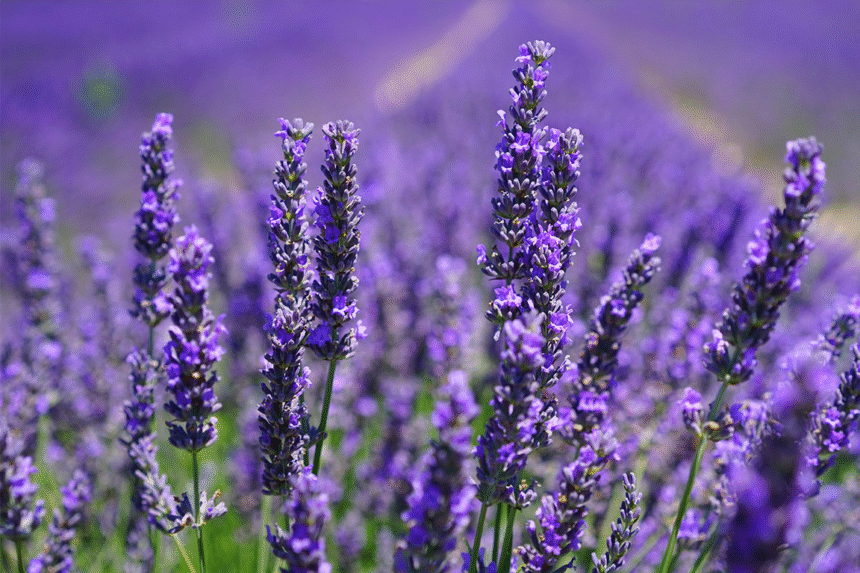
If terpenes were characters at a party, linalool would be the mellow DJ in the corner, spinning chill beats while everyone else is bouncing about. Soft, floral, and a little spicy, this terpene is best known as the signature scent of lavender, though it makes cameo appearances in loads of other herbs and fruits. It’s been prized for centuries as nature’s own relaxant, and modern science is finally catching up to what our ancestors already knew: linalool helps you loosen your shoulders and exhale.
Where you’ll find linalool naturally 🌿🍊
Linalool is hiding in more plants than you might guess. Its main natural habitats include:
- Lavender (its absolute signature!)
- Coriander seeds 🌱
- Basil and thyme
- Cinnamon bark
- Citrus fruits like orange and bergamot
- Cannabis, particularly floral strains
So whether you’re sipping Earl Grey with a twist of bergamot, seasoning curry with coriander, or enjoying a lavender-scented candle, you’re basically bathing in linalool vibes.
Historical chill factor 🛀🌙
Humans have been harnessing linalool-rich plants for thousands of years:
- Lavender baths in Roman times: the ultimate spa-day flex, used for relaxation and to ward off “nerves.”
- Traditional herbalism: lavender, basil, and coriander teas or oils were used for tummy troubles, sleeplessness, and calming frayed emotions.
- Aromatherapy: inhaling lavender oil remains one of the most common alternative therapies for stress, insomnia, and anxiety.
Basically, linalool has always been the friend you call when you need to chill.
What science says now (spoiler: lavender wasn’t lying) 🔬
1. Anxiety & stress relief
Multiple human studies back up what folk medicine claimed. For example, inhaling linalool-rich lavender oil has been shown to reduce anxiety levels in dental patients and people undergoing stressful medical procedures. Researchers think it works by modulating the GABA system in the brain (similar to how some anti-anxiety meds work, but gentler).
2. Sleep support
Several trials suggest lavender/linalool inhalation can improve sleep quality and duration, particularly in people with mild insomnia. It may not knock you out like a sedative, but it seems to smooth the path to slumberland.
3. Pain modulation
Animal studies show linalool can act as an analgesic, reducing pain perception. Some researchers suggest it tweaks neurotransmitter pathways linked to pain. Human data is thinner, but aromatherapy trials hint at small pain-reducing effects during childbirth and post-op recovery.
4. Anti-inflammatory & antioxidant
Lab studies demonstrate that linalool can reduce inflammatory markers and act as an antioxidant, protecting cells from oxidative stress. This might explain its traditional use in wound healing and skin balms.
5. Neuroprotective potential
Early animal research hints at neuroprotective effects, including in models of Alzheimer’s disease, by reducing brain inflammation and oxidative stress. It’s nowhere near clinical use, but it adds to linalool’s “chill the nervous system” profile.
The clinical catch 🧪
- Proven in humans: Stress, anxiety, and sleep support, especially via inhalation.
- Promising but early: Pain relief, anti-inflammatory, neuroprotection.
- Safety: Generally considered safe in foods and aromatherapy. In concentrated essential oil form, it can irritate skin, so dilution is key.
The takeaway (spritz of calm included) 🌸
Linalool is the soothing terpene superstar that makes lavender, basil, coriander, and citrus so relaxing to body and mind. Historically used in baths, teas, and oils, modern science now confirms its chill credentials: stress-busting, sleep-enhancing, and anxiety-reducing. The lab coats are also finding evidence for pain relief and neuroprotection, though more human research is needed.
So next time you light a lavender candle or sprinkle coriander on your curry, remember: you’re dosing yourself with nature’s built-in “calm the heck down” molecule.