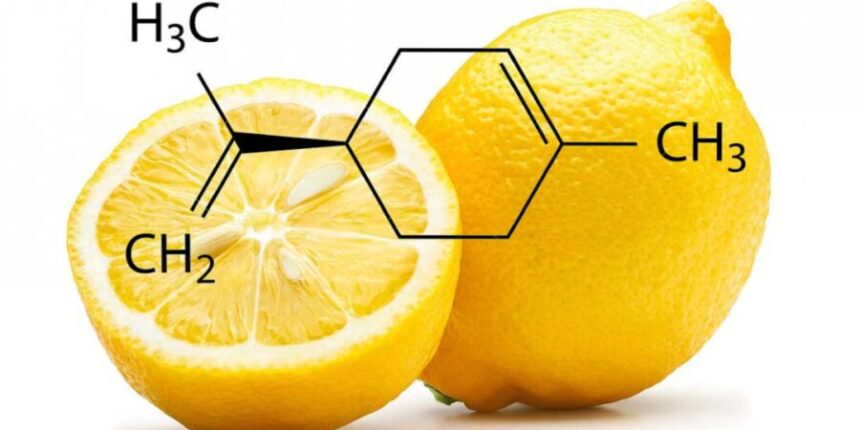
Imagine bottling the bright, tangy whack of a freshly zested orange and giving it a posh lab coat. That’s limonene for you, the citrus-scented monoterpene that’s basically the perfume of summer in a molecule. Here’s a funky, slightly cheeky deep dive into what it is, where it hangs out, what folk and science say it might do for you, and where the evidence actually stands.
What is limonene (in plain, slightly sparkly words)?
Limonene is a monoterpene, a small, volatile organic compound produced by many plants as part of their essential oils. It smells unmistakably of citrus (think orange peel, lemon zest) and exists as two enantiomers: D-(+)-limonene (the usual citrus-y one) and L-(-)-limonene (more piney/green in scent). It’s used widely in flavours, fragrances, and increasingly as a subject of biomedical research.
Where does limonene occur naturally?
You’ll find limonene most famously in the rinds of citrus fruits, lemons, limes, oranges, grapefruits, but it’s not exclusive to those. It also shows up in:
- Peppermint, rosemary and other herbs
- Juniper and certain pine/resinous plants
- Many cannabis strains’ terpene profiles (it’s one of the more abundant terpenes there)
- Various essential oils used in aromatherapy and cleaning products
So whether you’re peeling an orange, sniffing a sprig of rosemary, or admiring a cannabis bud’s aroma, limonene might be doing the heavy olfactory lifting.
Traditional and historical uses
Folk and herbal traditions have leaned on limonene-rich plants and oils for a range of uses:
- Mood-lifting and stress relief (aromatherapy with citrus oils)
- Digestive comfort — citrus peels and oils used for tummy upsets in some herbal approaches
- Topical uses for skin and as a solvent/cleanser (commercially it’s used in detergents and degreasers)
Historically, these uses come from the whole essential oil or plant, not pure limonene, but limonene is often credited for many of the bright, uplifting effects.
What science has explored (and what it actually found)
There’s a tidy body of preclinical research and a handful of early human studies. Big picture: lots of promising lab/animal work; limited but intriguing human data; and several clinical trials are ongoing or have been small/early-phase. Here are the headlines and the studies behind them.
1. Anti-inflammatory & antioxidant actions
Multiple reviews and experimental studies report anti-inflammatory and antioxidant effects of d-limonene in cell and animal models, suggesting mechanisms like reduced inflammatory cytokines and oxidative stress markers. These mechanistic findings are consistent across many preclinical papers and recent reviews. But translating that to reliable human benefits requires more trials.
2. Anxiolytic / mood effects (mostly from inhalation)
A number of animal studies show anxiolytic-like effects when limonene (or lemon oil) is inhaled, mice and rats spent more time in open arm mazes and showed behaviour consistent with reduced anxiety. Systematic reviews of inhaled citrus essential oil models back up a consistent anxiolytic signal in rodents. Human clinical evidence for inhalation is far more limited and mostly anecdotal; aromatherapy trials are mixed and often suffer from small samples or poor blinding. Bottom line: promising in animals, plausible in people, but we need sturdy clinical trials.
3. Anticancer / chemopreventive potential
Limonene has a surprisingly long research history in cancer biology. In rodents it has shown chemopreventive and anti-tumour effects (notably in breast cancer models), and it’s been explored in human studies:
- Early human Phase I/pharmacokinetic studies showed that D-limonene is well tolerated in cancer patients at doses that might be active, supporting further trials.
- Scoping/systematic reviews conclude there’s preclinical promise and some small clinical investigations (for example studies looking at distribution of limonene to breast tissue), but robust evidence of clinical benefit in humans is not yet established. Several trials are ongoing or planned.
4. Gastroprotective, hepatoprotective & metabolic effects
Preclinical studies indicate limonene can protect stomach lining in some ulcer models, reduce liver-stress biomarkers, and show some antidiabetic-style effects in animals. Again, human evidence is sparse and mostly limited to pilot/early studies or secondary outcomes.
5. Antimicrobial & insecticidal uses
Limonene shows antimicrobial activity in lab assays and is used commercially as a natural insecticide/repellent and as a solvent in cleaning products. These are practical, applied uses supported by lab and formulation work (and by product usage), though “kill rates in a petri dish” don’t always map neatly to human therapeutic effect.
Clinical / human research — the cautious verdict
- Safety/tolerability: Human phase I work suggests d-limonene is generally well tolerated in the doses tested (oral supplementation in trials), with a favourable toxicity profile, reason enough to keep testing in clinical settings.
- Efficacy: There are no large, definitive human trials proving limonene treats or prevents major diseases. Small trials and tissue distribution studies have been done (for example in breast tissue), and clinical interest continues, especially in oncology as an adjunct or chemopreventive agent, but the evidence stops short of clinical recommendations.
Practical notes & safety (don’t be a lemon)
- Aromatherapy with citrus oils is generally well tolerated, but essential oils are concentrated, topical skin application without proper dilution can cause irritation or sensitisation.
- Oral supplements of high dose limonene have been used in trials, but you should not self-prescribe therapeutic doses without medical supervision, especially if you have liver issues, are pregnant, or are on other medications.
- Many health claims online overstate what the science supports; remember that animal and in-vitro benefits don’t always translate to humans.
The takeaway (short, sunny, sensible)
Limonene is a widely abundant, citrusy terpene with genuine laboratory evidence for anti-inflammatory, antioxidant, anxiolytic (inhaled) and even anticancer effects in animals and cell studies. Early human work shows it’s well tolerated and it’s being actively studied — particularly in oncology — but we don’t yet have large, conclusive human trials showing clear therapeutic benefits. So: promising, bright, and worthy of more research — but not a miracle cure. PubMed+2PubMed+2
Want the receipts? (select sources)
I leaned on several peer-reviewed and published scientific studies while writing this. Here are a few accessible reads if you fancy digging deeper: