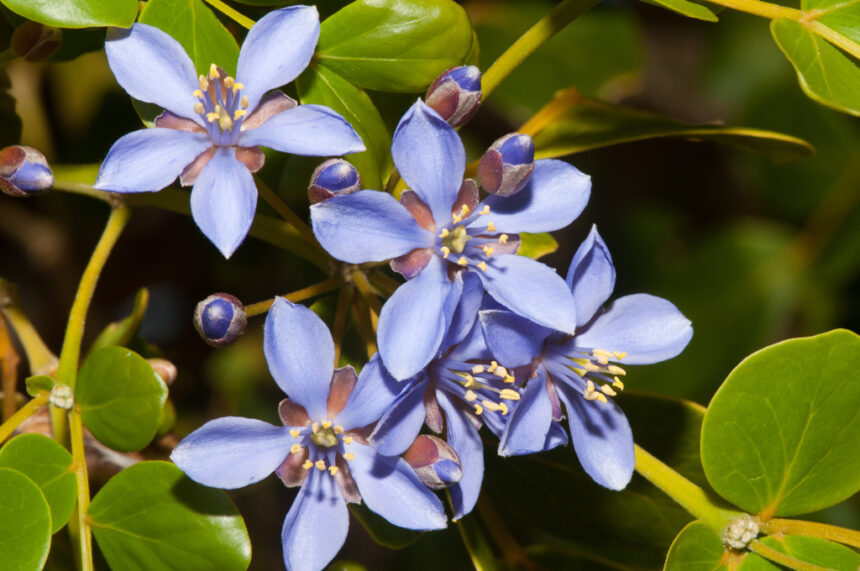
If terpenes were a line-up of musicians, guaiol would be the mysterious acoustic guitarist; understated, woodsy, and often overlooked, but when you pay attention, you realise it’s got depth and soul. Unlike the limonene and pinene crowd that shout their aromas from the rooftops, guaiol hums along in the background, with its woody, rosy, slightly citrusy scent giving character to essential oils and cannabis strains alike. And while it’s not the most famous terpene, science is starting to uncover that guaiol may have more to offer than just a pleasant whiff.
Where you’ll find guaiol naturally 🌱
This earthy little terpene is found in a handful of plants with long histories of medicinal use:
- Guaiacum trees (where it gets its name — used in traditional medicine for centuries)
- Cypress pine 🌲
- Cannabis (rare, but certain floral/woody strains contain it)
- Tea tree oil 🌿
Its presence is subtle but memorable, especially when paired with other floral or herbal terpenes.
Historical uses 🧴
Guaiacum resin (rich in guaiol) has been a star of traditional remedies for hundreds of years:
- Folk medicine: used to treat syphilis, coughs, and rheumatism in the 16th–17th centuries.
- Expectorant: guaiac wood extracts were brewed into syrups and teas to help clear phlegm and soothe the chest.
- Anti-inflammatory soaks: topical use for joint pain and swelling.
So guaiol comes with quite the herbal résumé.
What the science says 🔬
1. Anti-inflammatory activity
Animal and cell studies suggest guaiol has anti-inflammatory potential, helping to reduce swelling and inflammatory markers. This lines up nicely with its folk use in joint and chest complaints.
2. Antimicrobial properties
In vitro studies have shown guaiol has antibacterial and antifungal effects, making it useful in traditional antiseptic applications. While it won’t replace antibiotics, it adds to the defence profile of guaiol-rich essential oils.
3. Anticancer potential
Here’s where it gets intriguing: a 2016 study found guaiol could inhibit tumour cell growth in non-small cell lung cancer models by inducing apoptosis (cell death). It also appeared to enhance sensitivity to certain chemotherapy drugs. While still very early-stage, this suggests guaiol may be more than just aromatic window dressing.
4. Antioxidant activity
Like many terpenes, guaiol also shows antioxidant effects in lab tests, helping to shield cells from oxidative stress, one of the culprits in ageing and chronic disease.
Safety & reality check 🧪
- Safe in daily exposure: Found in plants and essential oils, guaiol isn’t considered toxic in normal doses.
- Essential oils: Concentrated extracts should always be diluted, as they can irritate skin.
- Evidence gap: Most modern research is limited to cell and animal studies; human clinical trials are practically non-existent.
The takeaway 🌳
Guaiol may not have the fame of limonene or myrcene, but it’s the quiet achiever terpene: woodsy, floral, slightly citrusy, and historically used in herbal medicine for coughs, rheumatism, and infections. Science now hints at anti-inflammatory, antimicrobial, antioxidant, and even anticancer effects, though most of the evidence is still preclinical.
So next time you catch that faintly rosy-woodsy note in cannabis or essential oils, tip your hat to guaiol, the understated terpene that’s been soothing lungs and joints since the 1500s. 🌿✨