This year’s 3rd Annual Colorado Psychedelic Cup is shaping up to be another milestone moment for the psychedelic community, science, and public engagement. Scheduled for November 2, 2025, at Baldoria on the Water (Lakewood, Colorado), the Cup continues to blend amateur and expert growers, chemists, and psychedelic enthusiasts in a celebration of plant and fungal potential.
In prior years, the Cup has grown rapidly. In 2023, the inaugural event drew 511 mushroom submissions from nearly 200 growers, and in 2024 over 500 samples were submitted, making it the largest publicly accessible psilocybin mushroom database of its kind. This year’s iteration includes not just mushrooms, but extracts, cacti, DMT, and more into the competition.
While winners of the 2025 Cup won’t be announced until November 2, the entries already hint at stellar chemistry and innovation. Among them:
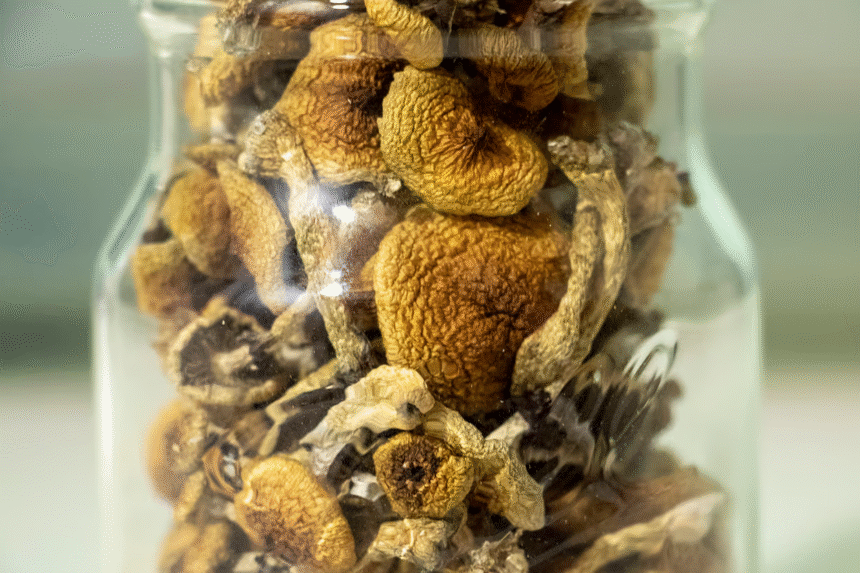
- A Panaeolus cyanescens strain showing over 5% psilocybin and nearly 10% total alkaloid content
- A Psilocybe cubensis variant with over 3.3% psilocybin and ~6% total alkaloid load
- A mimosa hostilis root bark extract exceeding 97% N,N-DMT (crystalline purity)
- An extract scoring 91.5% 5-MeO-DMT
- Additionally, submissions include cacti, edibles, biomass, and other extract forms
These entries reflect not only enthusiasts’ ambition but also a maturing community of chemists and growers pushing boundaries of potency, purity, and consistency.
Why the Psychedelic Cup Matters: Beyond a Potency Contest
At first glance, the Cup might look like a “who’s got the strongest mushroom?” show. But the organizers position it as much more than that. The Cup, hosted by the Psychedelic Club of Denver, in partnership with testing lab Tryptomics, is explicitly framed around education, harm reduction, community science, and data transparency.
The organizers emphasize that potency is only one measure; novelty, minor alkaloids, homogeneity, and the full chemical “fingerprint” matter too. As the rules document notes, categories include “Highest Total Analytes,” “Highest Total Minor Alkaloids (all psilocybin mushrooms),” “Most Pure Extract,” “Most Homogenous Edible,” and others.
In earlier editions, Cup organizers pointed out that participants often submit not just to “win,” but to contribute data to a growing open database of psychedelic chemotypes, information that has historically been scarce due to legal constraints. For example, after the first event, the database of mushroom potency and alkaloid profiles was described by organizers as “the largest public data set of homegrown psychedelic mushrooms” yet assembled.
That kind of data is useful not just to curious growers but to scientists, clinicians, policymakers, and regulators looking to build responsible frameworks for safe, reliable access.
Psychedelics as Therapy: The Science Gaining Momentum
The Cup’s timing coincides with a broader renaissance in psychedelic science and policy. Across the globe, researchers are gathering increasingly rigorous data on the therapeutic potential of psychedelics for mental health, addiction, trauma, and more.
Recent and high impact clinical research
- Psilocybin for depression and end of life anxiety. Multiple randomized controlled trials (e.g. at Johns Hopkins, Imperial College London, NYU) have shown that psilocybin-assisted therapy can produce substantial, durable reductions in treatment resistant depression and existential anxiety in palliative care populations.
- MDMA for PTSD. Phase 3 trials by MAPS (Multidisciplinary Association for Psychedelic Studies) have demonstrated strong efficacy for MDMA-assisted psychotherapy in severe PTSD, prompting FDA “breakthrough therapy” designation.
- DMT and 5-MeO-DMT. Though less advanced clinically, there is growing interest in short acting tryptamines (e.g. DMT, 5-MeO-DMT) as potential tools for rapid onset therapy, microdosing models, or adjuncts to psychotherapy. Some pilot trials and observational studies hint at efficacy in treating depression or facilitating spiritual insight experiences.
- Combination and microdosing studies. Researchers are also examining lower-dose (“micro”) regimens and combinations of psychedelics with psychotherapeutic frameworks, with preliminary but promising safety data.
In sum, the field is moving from anecdote toward science, and events like the Psychedelic Cup help feed that pipeline by expanding chemical knowledge in real world, community driven settings.
Legal jurisdictions leading the way
Psychedelic policy reform is progressing globally:
- Colorado (USA). In 2022, voters passed Proposition 122, the Natural Medicine Health Act, decriminalizing psilocybin, psilocin, DMT, ibogaine, and mescaline (excluding peyote) for adults 21+. It also provides for regulated healing centers where some substances may be used under supervision.
In late 2024 / early 2025, Colorado began issuing rules and licensing for therapy centers; Denver is working on local regulations (e.g. buffer zones from schools, advertising limits). - Oregon (USA). Oregon was the first U.S. state to legalize psilocybin for therapeutic use (Measure 109, passed in 2020). It also decriminalized small quantities of drugs via Measure 110.
- Australia. In 2023, Australia approved psilocybin and MDMA as prescription therapeutics for treatment-resistant depression and PTSD under strict medical supervision.
- Other jurisdictions. Several countries (e.g. Netherlands for psilocybin truffles, parts of Brazil, Jamaica, Portugal decriminalization frameworks) permit or tolerate various psychedelic substances in defined contexts.
- Clinical and research exemptions. Even in places where psychedelics remain scheduled, special research protocols or “expanded access” (compassionate use) pathways allow controlled use in trials.
These legal openings create room for events like the Psychedelic Cup, where growers, testers, and advocates can operate in safer legal space, build public legitimacy, and contribute to knowledge in a responsible way.
What to Watch at the 2025 Cup
As the November 2 date approaches, here are some angles and signals to keep an eye on:
- Data surprises. Will exotic strains (e.g. Panaeolus) outpace cubensis consistently? Will extract purity or minor alkaloids win unexpected categories?
- Edible standardization. As products (chocolates, gummies) evolve, homogeneity in alkaloid distribution (i.e., consistent dosing per edible unit) will be a key measure.
- Cross-class entries. More entrants may cross categories (e.g. combining fungi + DMT extract, or cacti + mushrooms). The Cup’s rules accommodate a wide range: mushrooms, extracts, edibles, cacti, DMT.
- Public and scientific uptake. Will the anonymized data be leveraged by academic groups or institutions? Will correlations between genetics, cultivation methods, and chemistry emerge?
- Policy watchers and regulation. As Colorado rolls out regulated natural medicine programs, local regulators may scrutinize entries or Cup published data in shaping oversight frameworks.
If the Cup continues evolving the way it has, more samples, more classes, more community investment, better lab testing, it could become a meaningful ongoing barometer of how the psychedelic movement transitions from the underground to the scientifically informed, socially responsible mainstream.
In Conclusion: A Cup Worth Watching
The 2025 Colorado Psychedelic Cup is more than just a contest. It’s a living experiment in community science, open data, chemotype diversity, and the cultural normalization of psychedelics under responsibly regulated frameworks. The early entries alone, high-purity DMT, potent mushroom strains, refined extracts, demonstrate both innovation and ambition.
As psychedelics continue to gain legitimacy in therapeutic settings across the U.S., Australia, and beyond, the Cup plays a bridging role: connecting grassroots cultivation, chemical knowledge, harm reduction ethos, and public education. When results drop November 2, they’ll be more than just winners, they’ll be data points in the evolving story of how societies responsibly integrate psychedelics into science, health, and culture.